
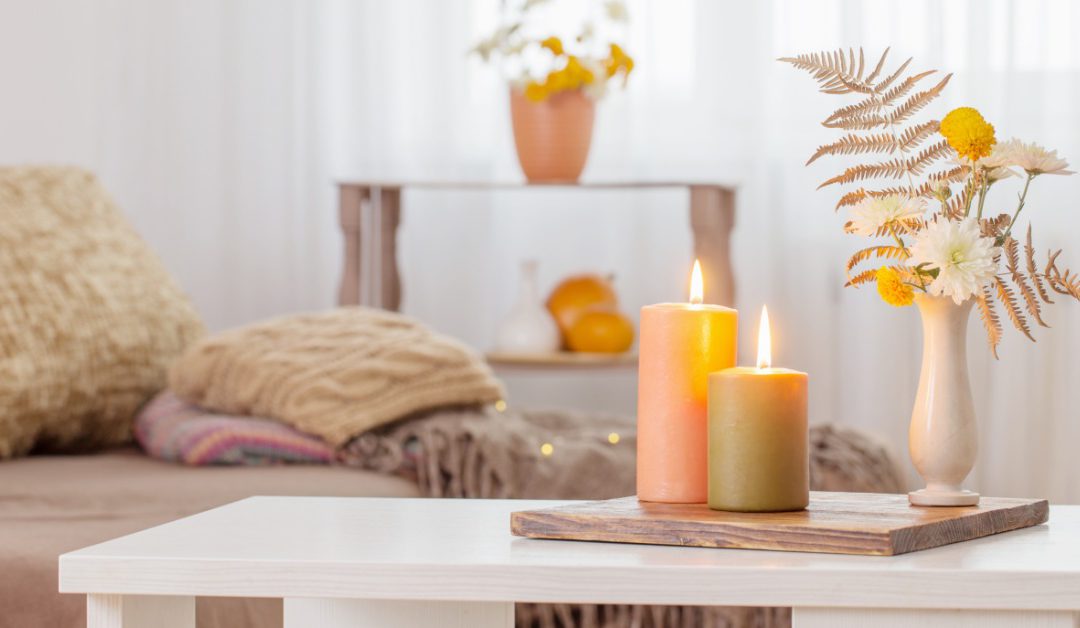
Candles work best in a room when they feel intentional rather than added as an afterthought. Their light should support the space you’ve designed, while their placement should respect how people move through the room and how closely the flame can be supervised.
That balance matters because a candle is both a decorative object and an active heat source. Integrating fire-safe candles into your décor means treating them as part of the room’s lighting plan, not just as accessories placed wherever an empty surface appears.
Start With the Room’s Existing Light
Before choosing a candle or candleholder, study how the room behaves after sunset. A bright ceiling fixture may flatten the space, while a lamp creates a softer pool of light that leaves other areas visually quiet.
Candles can fill those quieter areas without competing with the main light source. Place them where their glow can deepen the atmosphere, but avoid placing them on surfaces outside your normal line of sight. A candle may look attractive on a distant console, yet that placement becomes less practical if you can’t see it from the seating area.
The goal isn’t to make the candle the brightest feature in the room. It should add movement and warmth within a lighting arrangement that already feels controlled.
Use Sightlines as a Safety Feature
Interior design often uses sightlines to direct attention toward a fireplace or artwork. The same principle can guide safer placement because a visible candle is easier to monitor.
Choose locations that remain in view while the room is occupied. A candle on a low table may disappear behind a sofa arm, while one placed on a stable sideboard stays visible from several angles. This keeps the flame connected to the room rather than hiding it in a decorative vignette.
Give the Flame Its Own Visual Space
A candle arrangement can feel unfinished when every object is crowded together. It can also become less safe when the flame sits too close to dried stems or fabric décor.
To avoid these issues, give the candle enough open space to read as a focal point on its own. A broad tray or substantial holder can create that separation without relying on a cluster of small accessories. The result feels more deliberate, and the flame isn’t competing with nearby materials.
This is especially useful in homes with layered décor. Instead of removing the character from the room, you’re creating a defined zone where the candle can operate without being swallowed by the display.
Match the Holder to the Surface
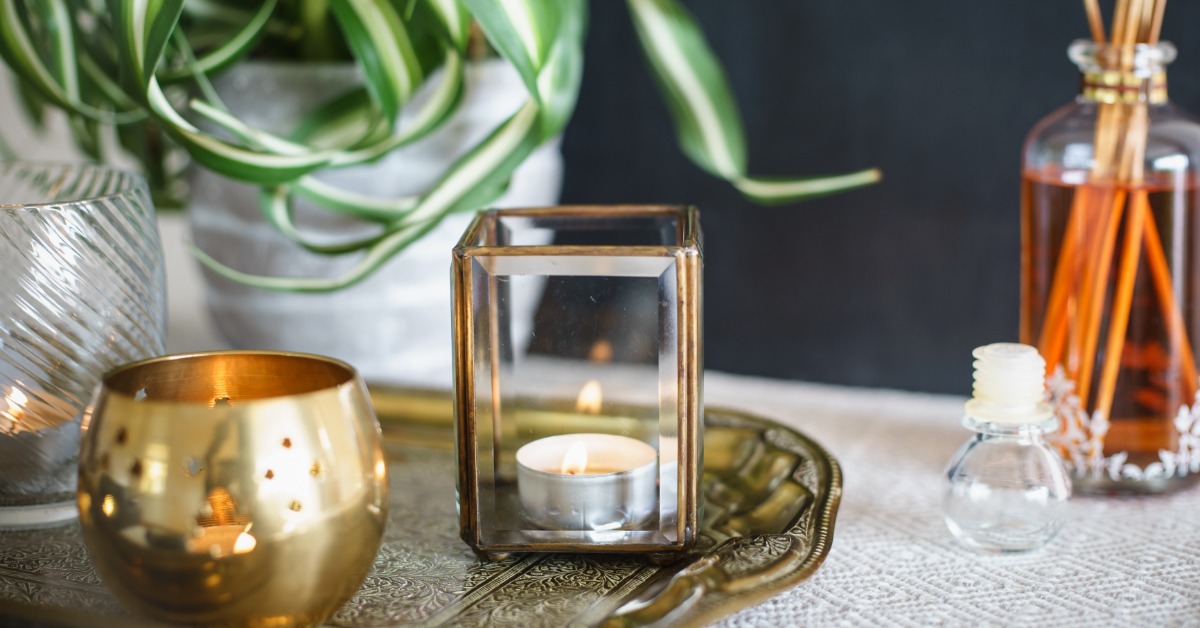
When integrating fire-safe candles into your home décor, remember that the holder should do more than fit the candle’s style. It should also suit the scale and stability of the furniture beneath it.
On a narrow mantel, a low-profile holder may feel more secure than a tall design with a small base. A large dining table can support more visual height, but the candle still shouldn’t interfere with conversation across the table. Choosing the right proportion keeps the arrangement elegant without making it feel precarious.
Material contrast can strengthen the design as well. A smooth holder can bring restraint to rustic wood, while a heavier stone base can give a delicate room more visual weight.
Build Décor Around Supervised Use
Some decorative ideas look appealing in photographs but don’t work as well in daily life. A candle placed high on a bookshelf may create an attractive glow, yet it’s harder to light and more difficult to watch closely.
Design around the way you use the room. If you tend to read in one chair, place the candle where it’s visible from that seat and easy to extinguish before you leave. If the dining room is used only occasionally, don’t treat its table as a permanent candle station that may be forgotten after guests move elsewhere.
Good décor supports habits instead of working against them. A practical placement can still feel luxurious when it’s tied to the rhythm of the room.
Let Technology Support the Design
Fire-safe candle features can add another layer of control without changing the look of the space. A self-extinguishing design may include a timer or another shutoff feature, which can be useful when you want real wax ambiance with added safeguards.
That technology should support attentive use rather than replace it. The most effective safe candles for home settings are still placed on stable surfaces and burned within sight. When the safety feature is built into a candle that suits the room, you don’t have to choose between a polished interior and a more thoughtful setup.
Smart features can also reduce awkward placement. A candle that can be extinguished without reaching across a crowded table may fit more naturally into a composed arrangement.
Use Repetition Without Creating Clutter
Repeating a candle style in more than one room can make the home feel connected. The repetition should be subtle, so each candle still belongs to the space around it.
You might use the same holder finish in the living room and entry, but change the scale to suit each surface. That creates continuity without forcing every room into the same formula. It also lets you build a recognizable lighting language throughout the home.
Try to avoid placing several active candles close together simply to create impact. though. One well-positioned flame can carry more visual authority than a crowded display that demands constant attention.
Adjust the Arrangement With the Seasons

Seasonal décor often introduces materials that change the conditions around a candle. Summer arrangements may feel open, while fall and winter displays tend to add more texture around the same surfaces.
Rework the candle zone as those materials change. A location that feels clear in spring may become too crowded once garland or fabric accents are added nearby. Rather than fitting the candle into every seasonal display, give it a consistent area that you can adapt without compromising visibility.
This prevents seasonal styling from becoming a safety issue. On top of that, it prevents the candle from becoming just another object competing for space in an already crowded décor space.
Keep High-Traffic Areas Visually Calm
Entry tables and kitchen counters often attract decorative objects because it’s easy to place objects on them. They also experience frequent movement, which makes them poor locations for anything that can be bumped or forgotten.
If you want candlelight near a busy area, move it slightly away from the traffic path while preserving the view. A nearby console may offer the same atmosphere with better stability. This shift can make the arrangement feel calmer because the candle no longer competes with keys or daily clutter.
Fire-safe décor works best when the placement feels natural enough to maintain. Once the candle has a clear role in the room, it becomes easier to enjoy its light without treating safety as a separate design problem.
Disclaimer: All candles, including self-extinguishing ones, should be burned within sight at all times. No candles should ever be left unattended.